How to Check Your Blood Pressure at Home Correctly
Published: November 12, 2026
Source: www.cdc.gov — official guidance
Check your blood pressure at home the right way, so your readings are accurate and useful for your doctor.
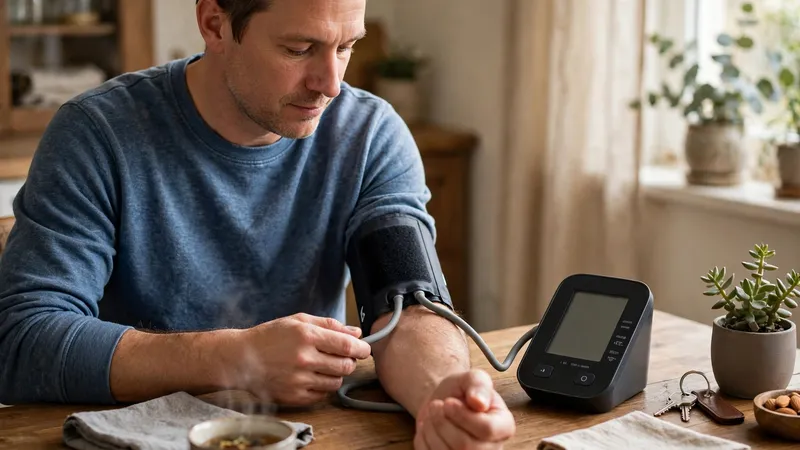
Before you start
- You need a digital blood pressure monitor with an upper-arm cuff — wrist and finger monitors are less accurate, so use an upper-arm one if you can.
- Check that the cuff fits your upper arm — it should sit snug on bare skin, with room for about two fingertips underneath, and follow the size guide that came with your monitor.
- Keep a notebook or your phone nearby so you can write down each reading straight away.
Prepare yourself and rest first
Before you measure, give your body time to settle. Do not take a reading within half an hour of eating, drinking caffeine, smoking, exercising or drinking alcohol, and go to the toilet first if you need to — a full bladder can raise your reading.
Then sit down in a quiet place and rest for a few minutes. Sit in a chair with your back supported, both feet flat on the floor and your legs uncrossed. Do not talk while you rest or while you measure, because talking and moving can change the result.
Put the cuff on your bare upper arm
Roll up your sleeve so the cuff goes on bare skin, not over clothing. Wrap the cuff around your upper arm, with its lower edge a little above the bend of your elbow — about two finger-widths above it — and check that it is snug but not tight. If the cuff is too small or too loose, the reading can be wrong, so check the size guide that came with your monitor.
Rest your arm on a table or firm surface so the cuff sits at about the level of your heart, with your palm facing up and your hand relaxed. Keep your arm still and supported — an arm hanging down or held up in the air will give a wrong reading.
Take the reading and note the numbers
Press the start button on the monitor and keep still and quiet while the cuff fills with air and then slowly releases it. It may feel tight for a few seconds — that is normal. Do not talk, move your arm or cross your legs while it works.
When it finishes, the screen will show two numbers: the top number is the pressure when your heart beats, and the bottom number is the pressure when your heart rests between beats. Most monitors also show your pulse. Write all the numbers down exactly as they appear, along with the date and time.
Take a second reading and keep a record
Wait a minute or two, then take a second reading the same way. If the two readings are very different, take a third one. This matters because a single reading can be higher than usual, and two or three readings give a truer picture.
Keep a simple log of your readings, and measure at about the same time each day — morning and evening are the usual times your doctor may suggest. Share the log with your doctor at your next visit, and ask them how often to check. If a reading is very high and you feel unwell, seek medical help at once.
Tips
- Measure at the same time each day, so your readings can be compared fairly from one day to the next.
- Check both arms the first time you measure at home, then keep using the arm that gave the higher reading.
- Follow the instruction book that came with your monitor — different models place the cuff and start the reading in slightly different ways.
Keep in mind
- Do not measure within half an hour of eating, drinking caffeine, smoking, exercising or drinking alcohol — all of these can push your reading up for a while.
- A home monitor does not diagnose high blood pressure on its own. Only a doctor can diagnose it, using readings taken over time.
- Never change your medicine based on a home reading. Always ask your doctor first.
- If you feel unwell, have chest pain, breathlessness or a very high reading with symptoms, seek medical help at once instead of waiting to re-check.
FAQs
My first reading was high. Does that mean I have high blood pressure?
Yes, that is common. Blood pressure changes through the day, and a single reading is not a diagnosis. Rest quietly, then take a second reading. If readings stay high over several days, share your log with your doctor — do not diagnose yourself from one number.
Which arm should I use?
Use the arm that gave the higher reading the first time you checked both arms, and use that same arm every time after that. This keeps your readings comparable from day to day.
Can I change my medicine based on my home readings?
No. Home readings are a guide to share with your doctor, not a reason to change medicine yourself. Never start, stop or change the dose of any blood pressure medicine based on a home reading — ask your doctor first.
What if the monitor shows an error or a very strange reading?
Check that the cuff is on bare skin, at the right height, and the right size, and that you rested quietly before measuring. If the monitor shows an error, check the cuff and batteries, then try again after resting. If errors keep happening, ask your doctor or pharmacist to check the monitor with you.
Sources
- https://www.cdc.gov/high-blood-pressure/measure/?CDC_AAref_Val=https%3A%2F%2Fwww.cdc.gov%2Fbloodpressure%2Fmeasure.htm
- https://www.stjohnssurgerybromsgrove.nhs.uk/patient-info/how-to-measure-your-blood-pressure-at-home/
- https://www.gloshospitals.nhs.uk/your-visit/patient-information-leaflets/home-blood-pressure-monitoring-for-expectant-parents/