How to Remove Stains from Clothes at Home
Published: November 12, 2026
Source: www.cleaninginstitute.org — official guidance
A stain does not have to ruin a favourite shirt — most everyday marks come out at home if you treat them the right way and in the right order.
Before you start
- Keep a liquid laundry detergent or a stain remover, a clean white cloth, and a spoon or blunt knife ready before you start.
- Find the care label inside the garment and read it first — it tells you how the fabric may be washed and what to avoid.
- Know this first: never put a stained garment in the dryer until the stain is fully gone, because heat can set the mark for good.
Act fast and read the care label
Start as soon as you can — the less time a stain has to soak in, the easier it comes out. First, look at the care label inside the garment. It shows how the fabric may be washed and whether bleach or hot water is allowed, and following it keeps the fabric safe.
Next, lift off anything sitting on the surface. Scrape off a blob with a spoon or a blunt knife, and blot a liquid spill with a clean cloth or paper towel. Always blot — never rub — because rubbing pushes the stain deeper into the fibres and can spread it wider. If the garment is delicate or says dry clean only on the label, stop here and take it to a professional cleaner instead.
Rinse the stain out with cold water
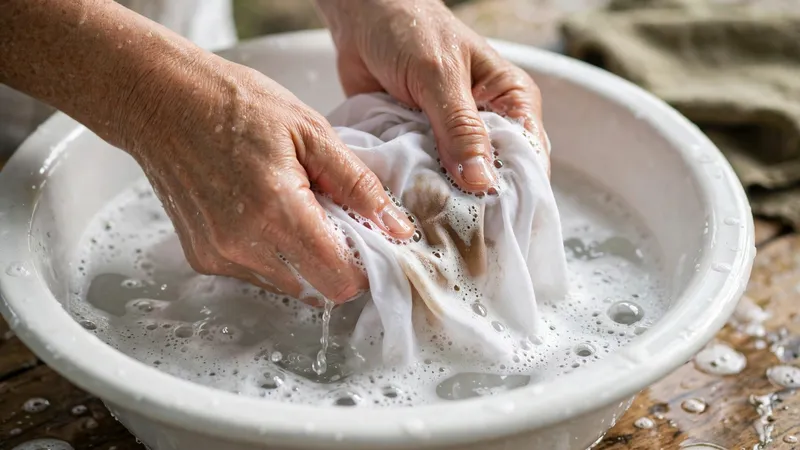
Hold the stained area under cold running water, rinsing from the back of the fabric so the water pushes the stain out instead of deeper in. This is the right first rinse for most stains, including coffee, tea and tomato sauce. For a greasy mark, skip the plain rinse and go straight to the next step.
If the stain is blood, use cold water only — never warm or hot. Keep rinsing until the water runs mostly clear. If the mark is still strong after rinsing, do not worry: the rinse only loosens the stain, and the pretreatment in the next step does the real work.
Pretreat the mark before washing
Put a little liquid laundry detergent or stain remover directly on the mark and work it gently into the fabric with your fingers or a soft toothbrush. For an oily or greasy stain, rub in a drop of plain dish soap first, then add the detergent — dish soap helps loosen grease that detergent alone may not shift.
Leave the pretreatment on the stain for a short while so it can work, then wash the garment without rinsing the product off. For ink, dab the mark with a little rubbing alcohol on a cotton swab first, and test it on a hidden spot before you treat the stain itself. If the fabric is coloured, check the label before using any bleach-based product.
Wash, check, and repeat if needed
Wash the garment in the machine on the cycle and at the temperature the care label allows, with the pretreatment still on it. Use your normal detergent, measured as the pack directs. When the wash finishes, take the garment out while it is still wet and check the stained area in good light.
If the mark is gone, dry the garment as usual. If any trace is left, repeat the pretreatment and wash again — do not put it in the dryer yet. Dryer heat can set a leftover mark permanently, so the check before drying is the most important part of the whole process.
Tips
- Keep a small stain kit ready at home — liquid detergent, a stain remover, dish soap, a soft toothbrush and clean white cloths — so you can act the moment a spill happens.
- Treat a stain before you toss the garment into the laundry basket. A mark left sitting in the pile has more time to set.
- Wash stained clothes separately from clean clothes when you can, so a stain cannot transfer to other garments in the wash.
Keep in mind
- Never use hot water on a blood stain — heat sets it and can make it permanent. Always start blood stains with cold water.
- Never put a stained garment in the dryer until the stain is fully gone. Dryer heat can set the mark so it never comes out.
- Test any stain remover or bleach on a hidden part of the garment first, like an inside seam. If colour comes off on your cloth, do not use that product on the garment.
- Never mix cleaning products, and only use bleach if the care label allows it. Keep all stain removers and detergents away from children and pets.
FAQs
Can I remove a stain that has already dried?
Yes, often — but it takes more patience. Soak the garment in cold water with a little liquid detergent for a while, then pretreat the mark and wash as usual. If the mark is still there after washing, repeat the soak and pretreat steps instead of drying the garment. A mark that has already been through a hot dryer may never come out fully.
What if I do not know what made the stain?
Start with cold water. Rinse the mark from the back of the fabric with cold water, blot it gently, and pretreat it with liquid detergent. Cold water is the safe first step for most unknown marks, while hot water can set some stains — especially blood — and make them permanent. If the mark looks greasy, rub in a little dish soap before the detergent.
Can I just use hot water on every stain?
Only when the care label allows it and the stain is greasy, like cooking oil. For most stains, and always for blood, use cold water first — hot water cooks the protein in blood and sets the mark. Wash at the warmest temperature the care label allows, and only after you have pretreated the stain.
What if the stain is still there after washing?
Do not dry it. While the garment is still wet, check the stained area in good light. If you can still see the mark, pretreat it again and wash it once more. Repeat this until the mark is gone, and only then dry the garment as usual. If the mark stays after a few tries, take the garment to a professional cleaner and tell them what the stain is.