How to Clean Your Ceiling Fan Without Making a Mess
Published: November 12, 2026
Source: www.hunterfan.com — official guidance
Cleaning a ceiling fan does not have to shower dust all over the room — trap the dust first, then wipe, and the floor stays clean.
Before you start
- Keep an old pillowcase, a clean microfiber cloth, a little mild dish soap, and a steady step ladder ready before you start.
- Spread an old sheet or newspaper on the floor and over nearby furniture under the fan, so any dust that escapes lands on it, not on your things.
- Know this first: switch the fan off and wait until the blades have fully stopped before you touch them — never clean a moving fan.
Switch the fan off and get ready
Switch the fan off at the wall switch and wait until the blades have completely stopped moving. If the light has been on, let it cool down before you touch it — a hot bulb can burn your fingers. This is also the moment to check your fan manual if you have it, since some fans have special coatings or parts that need gentle handling.
Now protect the room. Spread an old sheet or newspaper on the floor and over any furniture directly under the fan, and move anything precious out of the way. Gather your tools within reach: an old pillowcase, a clean microfiber cloth, a little mild dish soap, and your step ladder. Doing this first means you will not have to climb down halfway through.
Trap the dust with a pillowcase
Take the old pillowcase and slide it over one blade, like a sleeve, all the way to the base near the motor. Hold the blade gently from below with one hand so it does not bend, then press the pillowcase lightly against the top and bottom of the blade with your other hand and pull it slowly back towards you. The dust stays trapped inside the pillowcase instead of snowing down onto the floor.
Empty the pillowcase into a bin or shake it out outside before moving to the next blade, and use a fresh pillowcase if the first one gets very dusty. Go slowly on the first pull — a fast yank can fling dust out of the open end. Repeat the same slow slide-and-pull on every blade until the loose dust is gone.
Wipe the blades and the fan body
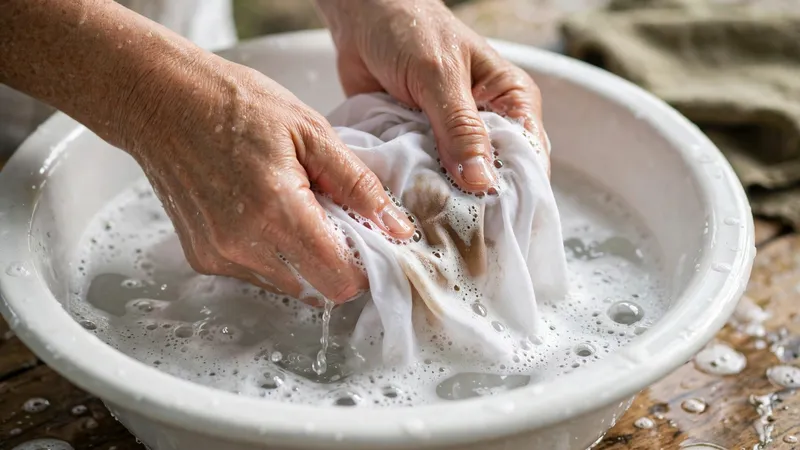
The pillowcase lifts the loose dust, but most blades still have a thin sticky film underneath, where dust has bonded with moisture and cooking fumes over time. Dampen a microfiber cloth with warm water and a drop of mild dish soap, then wring it until it is barely wet — never dripping. Wipe each blade top and bottom with the damp cloth, and wipe the motor housing and the pull chain or remote the same way.
Put the cleaner on the cloth, never on the fan itself, and keep water away from the motor. If your fan has a glass light cover, take it off if the manual allows and wash it separately in the sink, or wipe it with the damp cloth and dry it well. For wooden blades, follow your fan manual — some finishes should only be wiped with a dry or barely damp cloth.
Dry everything and test the fan
Dry every surface you wiped with a clean, dry cloth before you switch anything back on. Wet blades collect dust again fast, and any moisture near the motor or light fitting is a risk. Take up the sheet from the floor, shake it outside, and give the room a quick once-over for any dust that escaped.
Now switch the fan on at its lowest speed and watch it for a short while. It should run smoothly and quietly, with no wobble and no strange noise. If it wobbles, switch it off and check the blades — one may have been pressed out of line during cleaning. Once it runs smoothly, you are done, and the room is as clean as the fan.
Tips
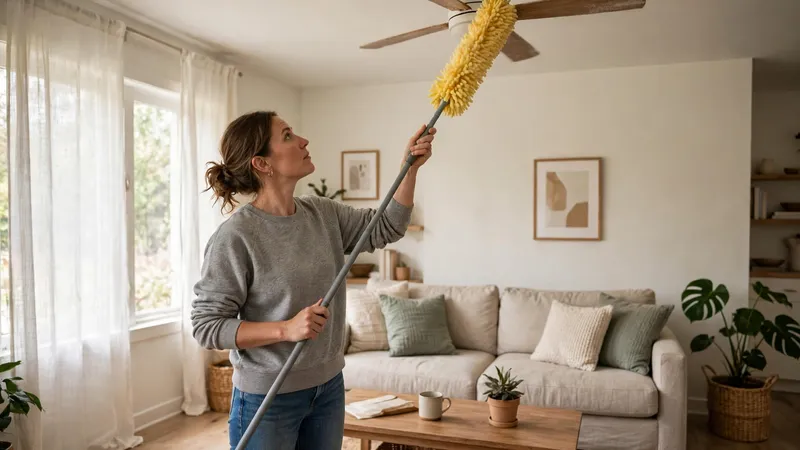
- Give the fan a quick pass with a long-handled duster every few weeks. Light dust comes off in seconds from the floor, and it stops the thick, sticky layer from ever building up.
- Keep one old pillowcase aside just for fan cleaning, and wash it after each use so it is ready next time.
- Clean the fan before you clean the rest of the room, so any dust that does escape gets picked up in your normal cleaning anyway.
Keep in mind
- Never clean a fan while it is running or still spinning. Wait until the blades have fully stopped, and keep the switch off while you work.
- Never stand on a wobbly chair or a stack of boxes. Use a steady step ladder placed on flat ground, and ask someone to hold it if you can.
- Never spray water or cleaner directly onto the fan, the motor housing, the light, or the switches. Liquid can seep into the motor and damage it.
- Never press hard on a blade or pull it down. Blades can bend, and a bent blade makes the fan wobble and noisy.
FAQs
How often should I clean my ceiling fan?
A quick dust with a long-handled duster every few weeks keeps the heavy build-up away, and a deeper clean with the pillowcase method every few months is enough for most homes. If the fan is in the kitchen, clean it more often — cooking grease makes dust stick much faster. A bedroom fan that runs all night also deserves a regular clean, since you breathe the air right under it.
What if I do not have a spare pillowcase?
Yes. A long-handled duster with a bendable head can wipe the top and bottom of each blade from the floor, and a vacuum cleaner with a brush nozzle can take off heavy dust. But neither traps the dust as well as a pillowcase, so cover the furniture below first. For the deepest clean, the pillowcase method is still the cleanest option.
My kitchen fan blades feel greasy. What should I do?
Grease needs a damp wipe, not just a dry dust. After the pillowcase step, dampen a microfiber cloth with warm water and a drop of mild dish soap, wring it until it is barely wet, and wipe each blade top and bottom. Wipe the motor housing too, but never spray anything directly on the fan. If the grease is stubborn, wipe again with a fresh damp cloth and then dry the blades.
The fan wobbles after cleaning. What should I do?
Switch the fan off straight away and do not keep running it. Check that every blade is dry and that no blade is bent or loose — a blade that got pressed hard during cleaning can sit at a different angle and cause a wobble. If a screw looks loose, tighten it only if your fan manual says it is safe for you to do so. If the wobble stays, or anything looks damaged, call a professional rather than fixing it yourself.