UPI Charges: NPCI Tells Supreme Court Shops Cannot Pass the New Fee to You
Published: November 13, 2026
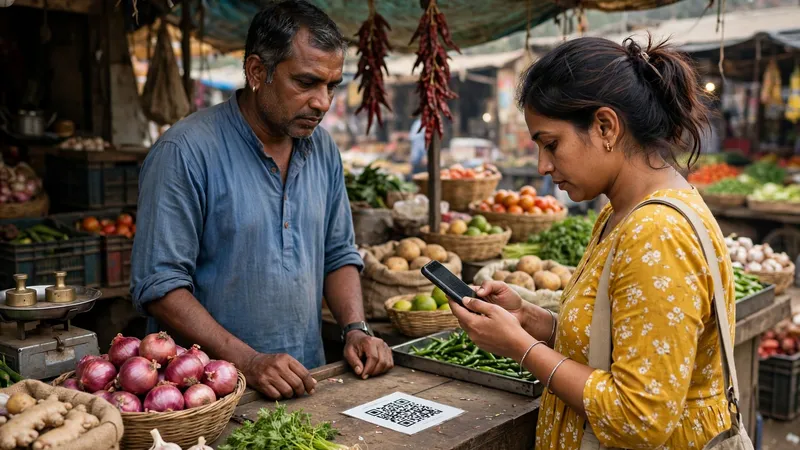
NPCI has told the Supreme Court that shops and UPI apps cannot pass the new 0.4% charge on large merchant payments to customers. Person-to-person payments and payments up to Rs 2,000 stay free.
Key Points
— the whole story in 10 seconds- 1No extra charge for you — NPCI told the Supreme Court the new Merchant Discount Rate of up to 0.4% is for merchants to pay, and shops and UPI apps cannot pass it on to customers.
- 2Only large merchant payments — The charge applies only to person-to-merchant UPI payments above Rs 2,000. Person-to-person transfers stay free at any value, and merchant payments of Rs 2,000 or less stay free.
- 3Most payments are untouched — About 96% of merchant payments are Rs 2,000 or less, so the charge would apply to only about 4% of merchant transactions. Small merchants receiving up to Rs 1 lakh a month through UPI QR codes are fully exempt.
- 4The charge has not started yet — NPCI's circular first set 15 October 2026 as the start date, but on 13 October NPCI said it would start after Diwali, on a date to be notified separately. No new date has been named.
Important Dates
The biggest worry people have had about UPI charges has a clear answer now. The National Payments Corporation of India (NPCI) has told the Supreme Court that the new charge on UPI payments is for merchants to pay, and that shops and UPI apps cannot pass it on to customers. NPCI filed its counter-affidavit in the Supreme Court on 3 November 2026, in the case challenging the charge, and the filing was reported on 5 and 6 November.
The charge itself is a Merchant Discount Rate, or MDR, of up to 0.4% on person-to-merchant UPI payments above Rs 2,000. It applies only to payments made to shops and businesses, not to money sent to friends or family. NPCI has also confirmed that UPI apps are not allowed to add platform fees or any extra charge on UPI payments. Reports of the affidavit also note that the charge is capped, with the cap working out to Rs 300 on very large payments above Rs 75,000.
Most everyday UPI payments are not touched at all. Person-to-person transfers stay free at any value, and payments of Rs 2,000 or less to any merchant stay free. Small merchants who receive up to Rs 1 lakh a month through UPI QR codes are fully exempt. NPCI told the Court that about 70% of UPI transactions are person-to-person transfers, and about 96% of merchant payments are for Rs 2,000 or less, so the charge would apply to only about 4% of merchant transactions.
NPCI says the charge is needed because free UPI left a gap between what it costs to run the system and the money available to run it. It told the Court this has limited spending on infrastructure, cybersecurity, fraud prevention and customer service for a system that handles billions of transactions every month. NPCI pointed to the Parliamentary Standing Committee on Finance, whose Thirty-Second Report found that the Rs 2,000 crore given to offset zero-MDR costs covers only 11% of the industry's costs, while the Finance Ministry estimated industry operating costs at Rs 20,700 crore. NPCI also said it will fund a dedicated programme to help small merchants with an annual turnover of up to Rs 20 lakh keep accepting digital payments, using 5% of each participant's share of the charge.
The charge has not started yet. NPCI's circular of 15 September 2026 had first set 15 October 2026 as the start date, but on 13 October NPCI said the charge would instead be implemented immediately after Diwali, on a date to be notified separately. Diwali fell on 8 November 2026, and the affidavit reported this week does not name a new date. The Supreme Court had already declined to stay the charge in September, and the case continues.
For now, nothing changes for you as a customer. If a shop asks you to pay extra for paying by UPI, NPCI's position is that this is not allowed, and it has said violations by banks or UPI apps can invite compliance action, including termination of UPI membership. Keep paying the way you normally do, and watch for the date NPCI notifies. If you are new to UPI, our guide explains how to send money with UPI step by step.
What to Do Next
— 4 steps to do right now- Keep paying as normal — Nothing changes for you as a customer for now. Keep paying the way you normally do.
- Do not pay extra at shops — If a shop asks you to pay extra for paying by UPI, NPCI's position is that this is not allowed.
- Watch for the notified date — Watch for the date NPCI notifies for the charge to start.
- New to UPI? Read the guide — If you are new to UPI, our guide explains how to send money with UPI step by step.
FAQ — Frequently Asked Questions
Tap a question to see the answer.
Q Will I have to pay extra when I pay a shop by UPI? ▾
No. NPCI has told the Supreme Court that the charge is for merchants to pay, and shops and UPI apps cannot pass it on to customers. NPCI has said violations by banks or UPI apps can invite compliance action, including termination of UPI membership.
Q Which UPI payments will the new charge apply to? ▾
Only person-to-merchant payments above Rs 2,000, at up to 0.4%, capped at Rs 300 on very large payments above Rs 75,000. Person-to-person transfers stay free at any value, and merchant payments of Rs 2,000 or less stay free.
Q Has the charge started yet? ▾
No. NPCI's circular first set 15 October 2026 as the start date, but on 13 October NPCI said it would start after Diwali (8 November 2026), on a date to be notified separately. The affidavit does not name a new date.
Sources
- https://www.medianama.com/2026/11/223-npci-defends-upi-mdr-charges-supreme-court/
- https://thesouthfirst.com/keralam/npci-defers-mdr-on-select-upi-merchant-transactions-till-after-diwali-keralam-hotels-to-stop-upi-payments-above-rs-2000/
- https://watch.cashlessconsumer.in/posts/2026-11-06-fintech-deep-dive-friday/