NPCI's UPI Vyapar Saksham Scheme: Rs 300 for a QR Code and Rs 750 for a Soundbox at Small Shops
Published: November 14, 2026
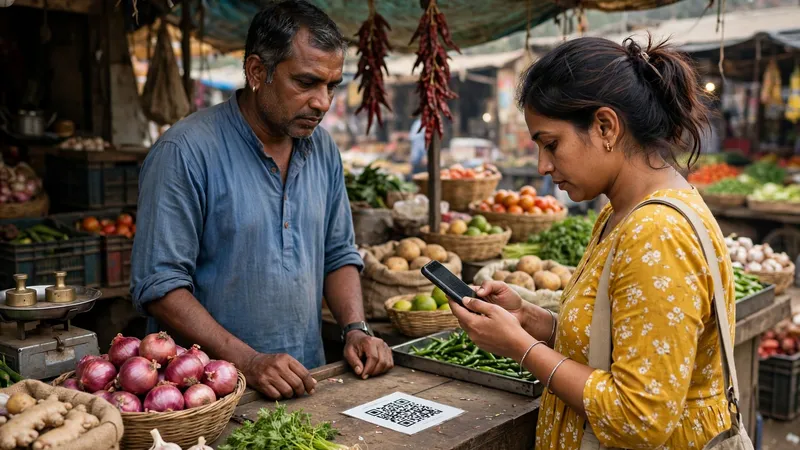
NPCI's new UPI Vyapar Saksham Scheme pays banks Rs 300 for every QR code and Rs 750 for every soundbox installed at small shops, funded from the new UPI merchant charge. Small merchants with turnover up to Rs 40 lakh qualify.
Key Points
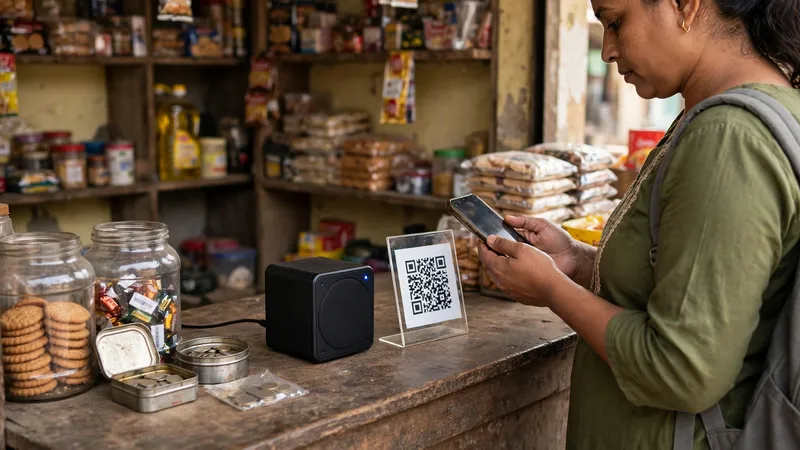
— the whole story in 10 seconds- 1Rs 300 per QR code, Rs 750 per soundbox — NPCI will pay Rs 300 for a physical QR code and Rs 750 for a soundbox installed at an eligible new merchant outlet. The money goes to the bank that installs them, not directly to the shopkeeper.
- 2Only small merchants qualify — Merchants with an annual turnover of up to Rs 40 lakh in the previous financial year are eligible, with the focus on Tier 3 to Tier 6 cities, the Northeast, Jammu and Kashmir and Ladakh.
- 3Shops must keep transacting — To qualify, a merchant must record at least 25 eligible transactions totalling at least Rs 5,000 per month in at least two months of a quarter.
- 4Funded by the new UPI charge — Banks and payment apps contribute 5% of their MDR share to the fund, and the scheme runs for three years from the day the UPI merchant charge takes effect, a date NPCI has not announced yet.
Important Dates
The National Payments Corporation of India (NPCI) has launched a new scheme to take UPI to small shops in smaller towns. In a circular issued on 11 November 2026, NPCI announced the UPI Vyapar Saksham Scheme, which pays banks and payment companies for installing UPI QR codes and soundboxes at small merchants and for growing the number of UPI transactions there.
The headline numbers are simple: Rs 300 for every physical QR code installed and Rs 750 for every soundbox deployed at an eligible new merchant outlet. There is one important detail, though. The money is not paid to the shopkeeper. It goes to the acquiring bank, the bank that installs the QR code or soundbox. The merchant still has to earn it: the outlet must record at least 25 eligible transactions totalling at least Rs 5,000 per month in at least two months of a quarter.
The scheme is aimed squarely at small merchants. Both new and existing small merchants with an annual turnover of up to Rs 40 lakh in the previous financial year are eligible. NPCI is focusing on Tier 3 to Tier 6 cities, the northeastern states, and the Union Territories of Jammu and Kashmir and Ladakh. In Tier 1 and Tier 2 cities, only small businesses covered by notified central government schemes, such as PM SVANidhi and PM Vishwakarma, can benefit.
There is also a reward for growing transactions. If a merchant's UPI transaction volume grows by at least 5% compared with the previous quarter, the payment provider gets an incentive of 0.03% of the eligible transaction value. In the targeted areas, that incentive gets a 50% uplift, and a further 0.20% is paid on the increase in eligible transaction value compared with the previous quarter. Only eligible payments of Rs 2,000 or less qualify, and artificially split payments are excluded.
The money for all of this comes from the new UPI merchant charge. Banks, payment service providers and UPI app operators will contribute 5% of their Merchant Discount Rate (MDR) share to a dedicated fund. The fund is split three ways: 30% for onboarding new merchants, 50% for growing transaction volumes, and 20% for incremental growth in the targeted areas, with no transfers allowed between the three parts. NPCI expects the scheme to help deploy 60 lakh to 1 crore new QR codes and 5 lakh to 10 lakh new soundboxes every year. Incentives will be calculated every quarter and processed within 30 days of a claim.
The scheme has no start date yet. It will run for three years from the date the UPI MDR takes effect, and NPCI's circular leaves that date unspecified. The charge itself is a 0.4% MDR on merchant payments above Rs 2,000, which is why the scheme can only begin once the charge begins. That charge has not started yet, as we reported yesterday. For customers, nothing changes: paying by UPI stays free for you. If you are new to UPI, our guide explains how to send money with UPI step by step.
What to Do Next
— 4 steps to do right now- If you run a small shop, ask your bank — Ask the bank that handles your UPI QR code whether your outlet qualifies. The incentive goes to the bank, so the bank has to install the QR code or soundbox.
- Keep your UPI transactions going — Record at least 25 eligible transactions totalling at least Rs 5,000 in at least two months of each quarter to stay eligible.
- Do not split payments — Only payments of Rs 2,000 or less qualify, and artificially split payments are excluded from the scheme.
- Customers: nothing changes for you — Paying by UPI stays free for customers. The scheme pays banks, not shops, and the merchant charge itself has not started yet.
FAQ — Frequently Asked Questions
Tap a question to see the answer.
Q Will small shopkeepers get Rs 300 or Rs 750 directly? ▾
No. The incentive is paid to the acquiring bank, the bank that installs the QR code or soundbox, not directly to the shopkeeper. NPCI announced the amounts as Rs 300 for a physical QR code and Rs 750 for a soundbox at an eligible new merchant outlet.
Q Which merchants can benefit from the scheme? ▾
Small merchants with an annual turnover of up to Rs 40 lakh in the previous financial year, new and existing. It focuses on Tier 3 to Tier 6 cities, the northeastern states, Jammu and Kashmir and Ladakh. In Tier 1 and Tier 2 cities, only merchants covered by notified central schemes such as PM SVANidhi or PM Vishwakarma are eligible.
Q Has the scheme started yet? ▾
No start date has been announced. The scheme runs for three years from the date the UPI Merchant Discount Rate takes effect, and NPCI's circular leaves the start date unspecified. The merchant charge itself has not started either.